
Do Taxis Take Cash Or Card In The UK?
22nd January 2026
How to Book a Taxi: A Comprehensive Guide
6th March 2026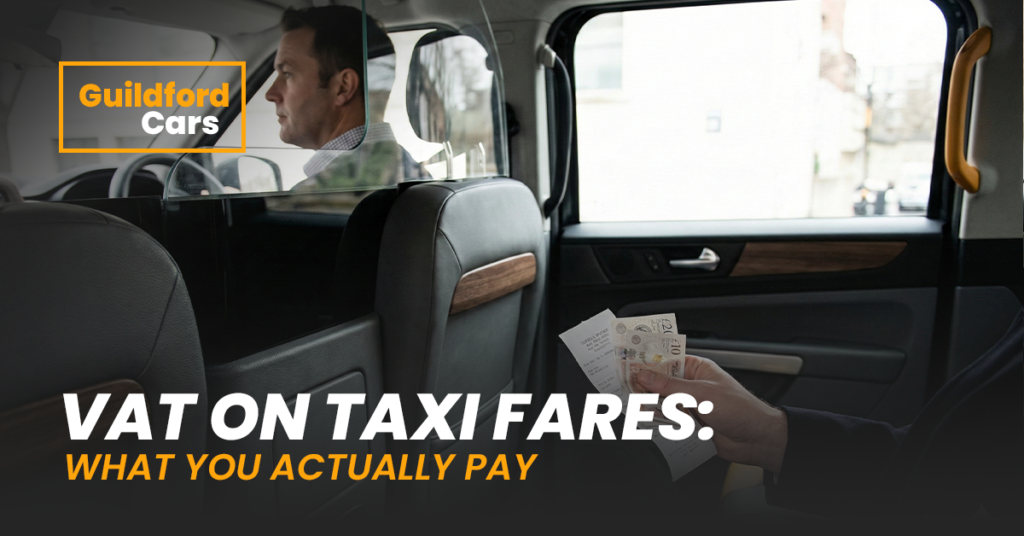
Confused about VAT on your taxi receipt? You’re not alone. Most passengers don’t realise that not all Guildford taxis charge VAT the same way and understanding why can save you money or help with business expense claims.
When Do Taxis Charge VAT?
Here’s the simple version: if a taxi or minicab company earns over £90,000 annually, they must register for VAT and charge 20% on fares. Smaller operators below this threshold don’t have to charge it.
So when you book a Guildford station taxi for your commute, check your receipt. VAT-registered services will clearly show the breakdown, which is typically base fare plus 20% VAT. Non-VAT registered companies simply charge a total fare with no tax added.
VAT-Registered Taxi vs Non-VAT: Which Costs More?
This trips people up. A £20 fare from a VAT-registered company includes £3.33 in tax. But that doesn’t mean non-VAT taxis are cheaper. Many non-registered operators charge similar total prices but you’re just not seeing the tax itemised separately.
The real difference? VAT-registered companies tend to be larger, more established operations with better vehicle fleets and customer support systems. They’ve hit that revenue threshold for a reason.
Impact of VAT on Taxi Fare Prices
VAT affects your pocket differently depending on who’s paying. Personal travellers absorb the full cost. But business commuters can reclaim that 20% through company expenses. The airport transfer becomes 20% cheaper when you’re not footing the bill personally.
Private hire services handle VAT on taxi extras too. If the company is VAT-registered, expect 20% on top for child seats, waiting time and motorway tolls. Always ask upfront when booking so there aren’t any surprises on the invoice.
Taxi VAT Rules for Business Travel
Corporate clients need proper VAT receipts for HMRC compliance. When booking minicabs for business trips, make sure your chosen service provides:
- Company VAT registration number
- An itemised breakdown showing VAT separately
- Journey details like date, route and passenger name
Most professional minicab companies operating on busy commuter routes automatically issue these. Smaller, non-registered operators can’t provide reclaimable VAT receipts, which is something you must consider if you travel for work regularly.
Choosing the Right Service for Your Commute
When understanding the pricing, it is important to know the standard percentage of VAT on private hire taxi fares. Having a clearer picture means you can make a wise decision when planning to book a minicab service. However, VAT status matters less than service quality and reliability. Licensed minicab companies, whether VAT-registered or not, offer professional drivers, insured vehicles and transparent pricing. That beats saving a few quid with an unlicensed driver any day.
Frequently Asked Questions (FAQs)
Is VAT included in taxi fare?
No, not all taxi fares include VAT. It can only be charged by companies that are VAT-registered.
Why are some taxi fares VAT-free in the UK?
Companies earning under £90,000 annually aren’t required to register for VAT, so they don’t charge it.
How do I know if VAT is included?
Ask when booking, or check your receipt afterwards. Companies registered for VAT display their VAT number and show the tax as a separate line item. If there’s no VAT breakdown, the company is most likely not registered for it.
Can you reclaim VAT on taxi fares in the UK?
Yes, if you’re travelling for business and the taxi company is VAT-registered. You’ll need a proper VAT receipt showing the registration number and tax amount. Non-VAT registered services can’t provide reclaimable receipts.
When must taxis charge VAT?
Once a taxi or private hire company’s annual revenue exceeds £90,000, they must register for VAT and charge 20% on all fares and services. This is mandatory and they can’t opt out.